14 KPIs you need to know to assess the follow-up of a project
When managing a project, you should always keep an eye on the deadline, budget, scope of the project, and the quality of the work done. Thus, to know where you are in the accomplishment of your project, it is essential to use KPIs (Key Performance Indicators in English), also called Key Performance Indicators (KPIs).
We can compare managing a project to driving a car, you cannot do without the dashboard and its numerous indicators to move forward peacefully to your destination:
- the tachometer to know when to change gear;
- the speedometer to know the speed at which you are driving;
- The fuel gauge tells you if you have enough fuel to reach your destination;
- the various lights ensure the proper functioning of your vehicle.
These on-board instruments let you know that you will arrive at your destination without a hitch. It's the same with the KPIs for managing your projects.
What you need to know about KPIs (or project performance indicators)
A KPI or key performance indicator allows you to assess the performance of a project in relation to specific objectives. It is always a precise and measurable indicator, which must be defined early in the project to be relevant. It allows you to know where you are in achieving your goals, what are the points where you are succeeding and where you are struggling. The KPI is a precise and measurable indicator that must be defined early in the project to be relevant.
KPIs facilitate project management because they give you a quick overview of the status of the project at a given moment. Indeed, each KPI provides you with precise information that allows you to assess a situation at a given moment and to make an appropriate decision.
To use KPIs effectively, remember only one indicator:
- must be associated with a specific objective;
- must be realistic, measurable and time-bound at the same time;
- necessarily involves a decision (even the decision not to act);
- is never mute;
- should be simple and understandable by everyone.
Choose your own indicators with your team and the people involved in the project (customers, suppliers, etc.) from the start of the project.
What are the benefits of project monitoring for businesses?
Project monitoring is essential to guarantee performance, as it makes it possible to quickly identify potential differences between the initial objectives and thus be in a position, if necessary, to anticipate and manage problems.
Throughout the project, the KPIs will allow you to communicate effectively with your team, but also with all stakeholders, on the progress of the project.
Finally, performance indicators are a key element in the continuous improvement process. By regularly analyzing the various KPIs, it becomes possible to identify the blocking points and improve the overall performance of the project. Especially since this information is also very useful for making strategic decisions in full knowledge of the facts in order to make the right choices, at the right time.
4 categories of KPIs to monitor and monitor your projects
While Project KPIs are essential, it is however necessary to choose them carefully to ensure their effectiveness. To do this, remember that an indicator must be associated with a specific objective, but also be realistic, measurable and defined over time. This KPI must also be simple in order to be understandable by everyone and it necessarily involves a decision (even the decision not to act).
There are four categories of KPIs:
- Cost indicators allow you to check that your project does not exceed the allocated budget.
- Delay indicators are essential to verify that the project meets the deadlines and is not delayed.
- Quality indicators help you to ensure the quality of the work provided.
- Effectiveness indicators and the progress of the project allow you to know if you are managing the project effectively, if the budget, resources, and time are being used wisely, and if the progress of the project is satisfactory.
14 KPIs to measure the follow-up of your project
Discover 14 KPIs classified by category to help you better manage your projects.
Cost indicators
Cost indicators are strategic because they allow you to control that your project does not exceed the allocated budget.
- Actual cost : calculation of the real cost of the project. It is measured by adding up all current project expenses.
- Unplanned costs : this is all the expenses incurred but not originally planned in the project.
- Cost of delays: this KPI allows you to know what your delay is costing you. It is calculated by adding up the additional expenses related to the delay such as overtime labor, maintenance, troubleshooting, etc.
- Project cost gap: calculate the difference between the actual cost of the project and the originally planned cost.Calculation: (actual cost — estimated cost)/estimated cost.
Delay indicators
Deadline indicators are essential to verify that the project meets the deadlines and is not delayed.
- Delay rate : this KPI allows you to know the percentage of delay compared to the originally planned schedule.Calculation: (tasks not carried out/tasks planned) X 100
- Duration of a task : useful for measuring the time required to complete a task, especially recurring tasks.
- Duration gap : measure whether a task or a milestone takes longer to complete than what you originally planned.Calculation: (actual duration - initial duration)/initial duration
- Delay gap : this indicator measures whether you are ahead of schedule, on time, or late on schedule when the project was started.Calculation: time originally planned — time currently usedA negative result indicates that you still have time left to continue with the project.
Quality indicators
Quality indicators help you monitor the quality of work provided.
- Customer satisfaction : an excellent quality indicator that can be measured through a satisfaction questionnaire as well as by customer or consumer loyalty.
- Number of errors : This KPI indicates the number of times you had to redo a task or rework on an item. Mistakes have an impact on the project budget and schedule.
- Customer complaints : just like customer satisfaction, it is a good indicator of the quality of the project and the work provided.
Effectiveness indicators and the progress of the project
Quality indicators help you monitor the quality of work provided.
- Advancement rate : as its name suggests, this KPI allows you to know what is the progress of your project.Calculation: (tasks completed/tasks planned) X 100
- Number of tasks or milestones completed : it is another good indicator of the progress of the project.
- Time spent on the project : At any point in the project, compare the hours already worked against the hours originally planned to see if you and your team are effective. If the number of hours spent is greater than expected, you may need to review the estimate of the time required to complete the project.
3 best practices for setting up your project monitoring KPIs?
When setting up your KPIs, it is important to follow a few best practices in order to ensure their effectiveness.
1. Define control roles and processes
For each objective, appoint a manager and define the control processes in advance. This makes it possible to avoid possible tensions during the project, as the project objectives or performance indicators are changed.
2. Setting up a project infrastructure
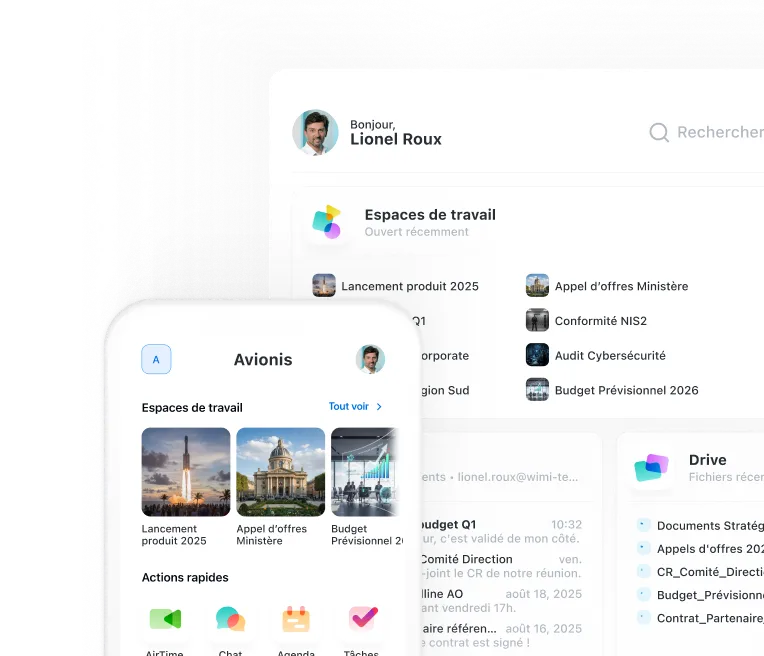
You must then set up an adapted project and performance monitoring infrastructure. Project management software like Wimi is therefore ideal for monitoring your project and your KPIs in a transparent and professional manner.
3. Revise your KPIs according to your goals
Of course, performance indicators are not fixed. On the contrary, you must maintain an agile approach at all times and update your Project KPIs if necessary.
The adjustment of the KPIs fluctuates depending on the status of the project. Thus, as part of an accelerating project, the frequency of revision of the KPIs must be almost daily. If the project is rather slow, we recommend that you review your performance indicators once every two weeks instead.
An effective review process involves collecting data, analyzing results to identify potential deviations from objectives and finally adjusting objectives or KPIs according to these results.
Exploit the potential of a project management tool to monitor your KPIs
To ensure the achievement of goals and simplify your life, use the Wimi project management software. You and your team can directly create and update your KPIs in real time, have a precise vision of the progress of the project and assess the performance of your team as well as that of the project with ease.
This list of performance indicators is not exhaustive. There are lots of others out there and you can even create your own KPIs.
Finally, make your life easier by using a project management software. You and your team can directly create and update your KPIs in real time, have a precise vision of the progress of the project and assess the performance of your team as well as that of the project.