Zen To Done Method: Combining Simplicity and Efficiency
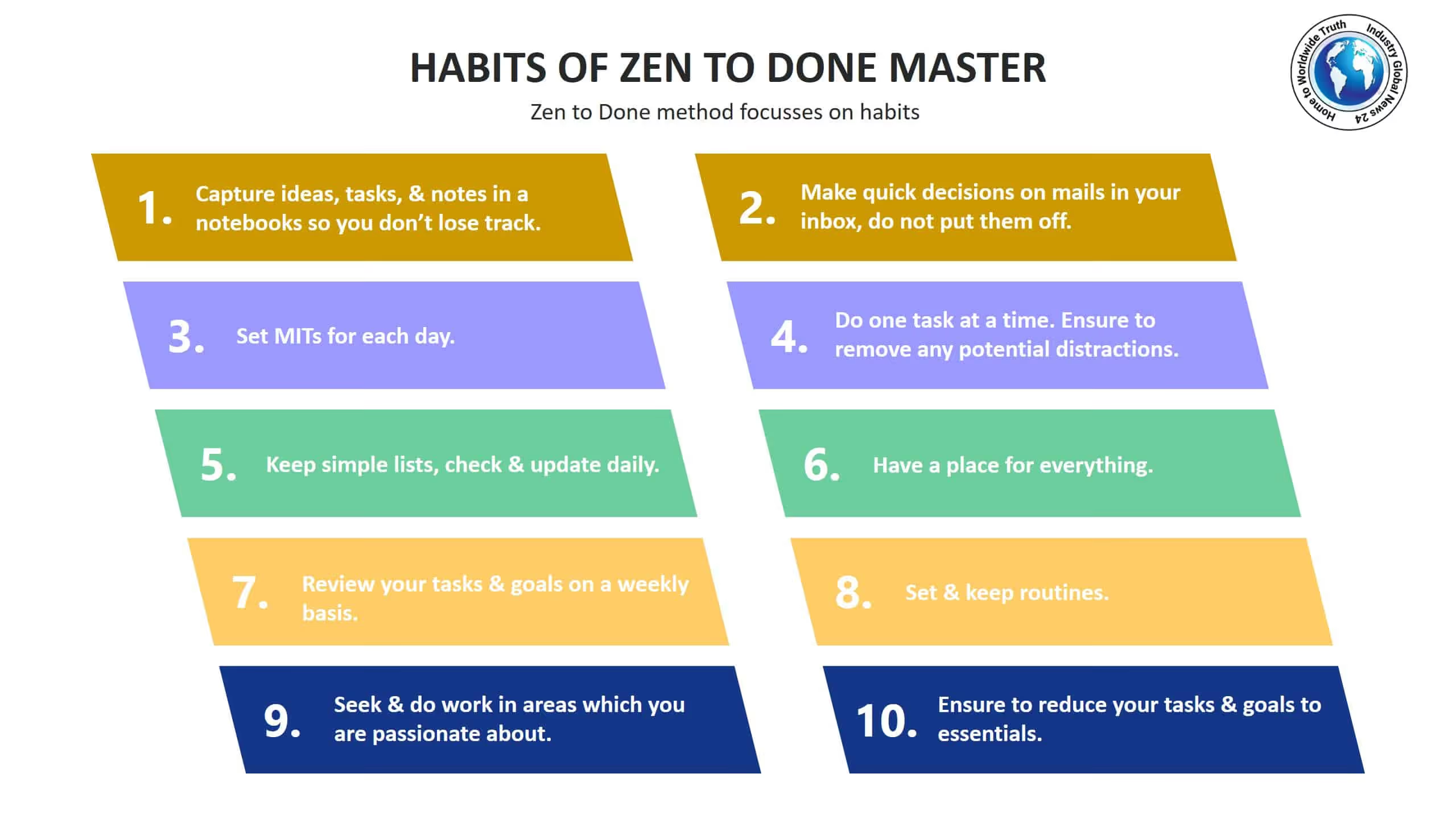
Interruptions and distractions are common at work. Between notifications from the inbox or exchanges with collaborators, it sometimes becomes difficult to stay focused. One of the most suitable methods for reduce stress while meeting productivity goals is the Zen To Done method. Indeed, this method makes it possible to better manage your time and to become efficient, but it offers you the opportunity to do it in a relaxed way !
Origin and philosophy of the Zen To Done method
The Zen To Done method is the work of Leo Babauta, the author of Zen Habits blog. A fan of minimalism, he sought to design a productivity method that promotes clarity and peace of mind.
To develop his method, he was partly inspired by that of David Allen : the Getting Things Done method. Less rigid, the Zen To Done approach is more flexible and offers principles, more than strict rules. This agility makes it possible to use this method to increase your personal productivity in your professional life, but also in your private life.
The 10 habits of the Zen To Done approach
Take a deep breath... we are going to discover the ten principles of the Zen To Done method. It is in facthabits that you should gradually incorporate into your daily life. You will thus be able to take full advantage of it while remaining zen.
1. collect
To start, get in the habit of collect tasks and ideas that come to mind. The objective is to free the mind by unloading it of information that can become a source of anxiety. Write them down on your productivity tools. It can be a notebook, software, or post-it notes.
2. Treat
On a daily basis, set aside a moment during your working hours in order to deal with the entrants. These can be emails, task lists, or physical letters. The important thing is toincorporate this process into your schedule to avoid procrastination.
In order to best deal with these inputs, you must delegating, Plan, Do without waiting this task or the suppressing if it is not essential.
3. Plan
To optimize your time management, set simple and achievable goals. These must in particular take the form of three important tasks. These are things you want to do before the end of the day. To avoid wasting time unnecessarily, Take care of them as soon as you arrive at the office, in the same way as under the Eat That Frog method.
4. Act
The action does not rhyme with haste here. All you have to do is simply focus on the task at hand. In other words, remove distractions that could be hampering your productivity. Avoid multitasking and switch your notifications to silent mode to maximize work time.
5. Contextualize
Choosing your professional priorities is an important part of being effective. For this reason, don't overload your schedule or notebooks with dozens of different categories. Set up simple categories that refer to a context in a clear way: @maison, @travail, @en courses, etc.
6. Organize
To stay zen while being productive, Above all, you should not burden your daily life. Organization is the key to a work environment that boosts productivity. In other words, don't pile up files and don't pile up tasks. Organize and organize as you go to preserve your serenity.
7. Examine
Are you still on track? To make sure of this, Take stock on a regular basis on your tasks and projects. On a weekly, monthly and annual basis, track your results and appreciate each achievement made with the Zen To Done method.
8. Simplify
If the method is zen, it is because it uses simplicity And at minimalism. Boosting productivity with the ZTD method means gaining clarity by eliminating all unnecessary things. Focus only on the essentials and consistently reduce tasks and goals.
9. Set up a routine
Routines are rituals that promote success. Elles Set a context in which it becomes easy to be more productive during the working day. These routines structure your action and are specific to each person. One individual will prefer to organize their day by starting with a meditation session while another will need their morning coffee.
10. Finding your passion
Indeed, it is obvious that work efficiency depends on your involvement. If you find your passion, you will be more effective and finalize your to-do list easily. On the contrary, if you are not interested in your job, some tasks will be perceived as time-consuming and unexciting.
How to put this ZTD method into practice?
One of the advantages of the Zen To Done method is its flexibility. On the one hand, she can without harm be put into practice alongside other methodologies like the Pomodoro technique or the Eisenhower matrix. On the other hand, she adapts to everyone's needs and expectations.
Therefore, to fully benefit from the advantages of the ZTD method, we recommend that you follow these best practices:
- Customize the method: Being more effective does not mean complying with a rigid method. The Zen To Done approach allows you to personalize the method according to your lifestyle and priorities.
- Integrate them gradually: Saving time and knowing how to deal with the unexpected requires time to adapt. For this reason, adopt the method gradually. Choose the gentle method and not a revolution in your habits.
- Adapt it to the context: Why limit the Zen To Done method to your professional life? Use it also in your personal life by adapting it if necessary.
- Stay tuned to your needs: As you discover this method, stay tuned. ZTD should always be aligned with your personal needs and goals and should never create tension.
- Use complementary tools: To reinforce the impact of the method on your productivity, do not hesitate to combine it with physical tools or digital solutions in order to optimally achieve your goals.
Navigate with peace of mind and reach your goals
Simplicity and serenity. The Zen To Done method is a real breath of fresh air. Unlike some productivity management methods, which are sometimes rigid or unengaging, the ZTD approach is as flexible as it is efficient.
With it, it becomes easy to establish priorities, meet deadlines and reduce workload by focusing on the essentials. Dedicating your time to tasks that are really important is a way to save your time and energy. You can then be productive while achieving a better work-life balance.