The 7 principles of PRINCE2: a detailed overview
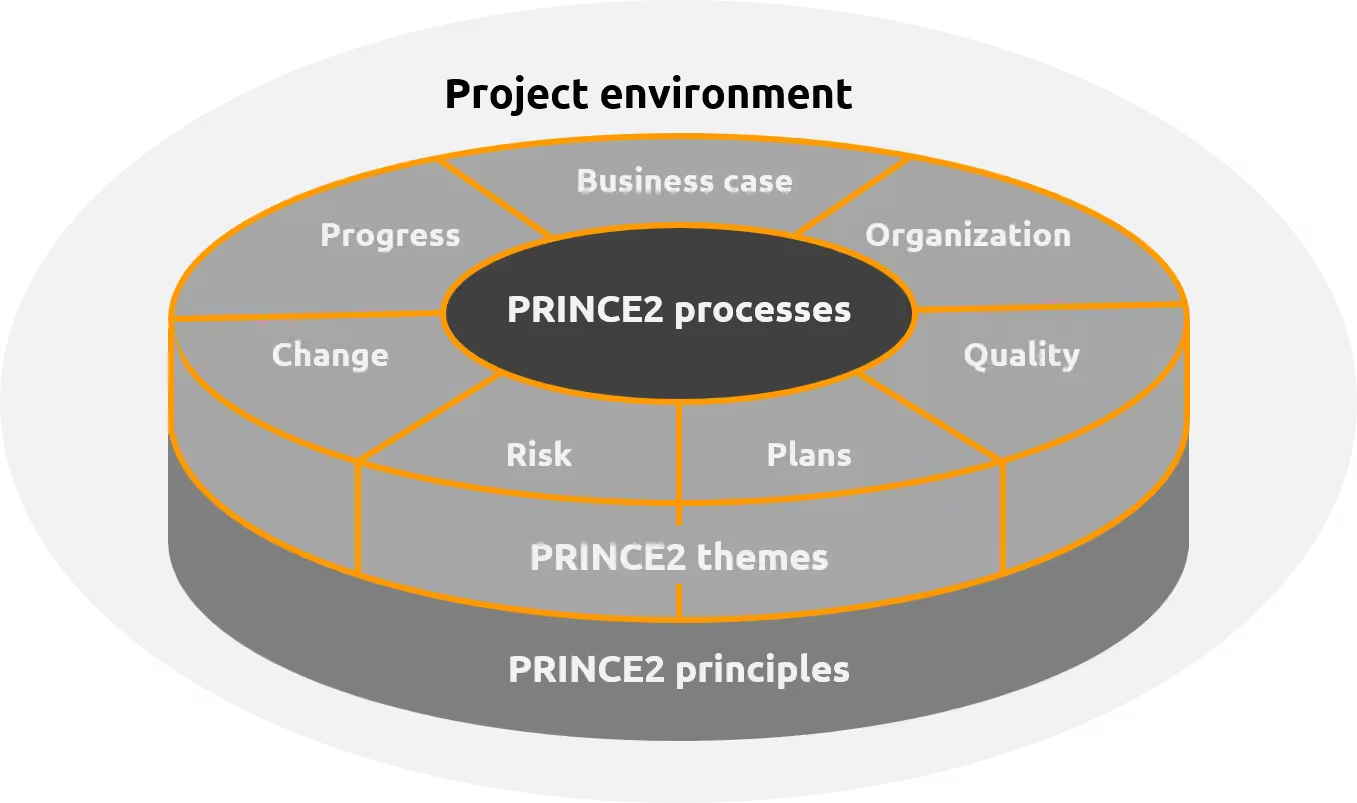
The PRINCE2 project management method is a efficient approach to manage any type of project. Thus, project managers can use it to manage both simple and complex projects. To teach you how to use this structured and proven process, we present its seven fundamental principles. The latter are the basic elements of the method that will allow you to carry out your projects in a simple and effective way.
What is the PRINCE2 method?
PRINCE2 (Projects IN Controlled Environments) is a project management method developed in the United Kingdom in the 1970s. Initially, it was used for IT projects. However, it has evolved and this method is now used in all types of projects.
Rigorous, the PRINCE2 control method is based on a set of defined processes. Each of these processes in turn consists of steps to ensure the success of the project. The idea is then to master the different facets of the project.
Within the framework of this specific approach, project management consists of plan, delegate, control and motivate activities in order to achieve the objectives defined within performance targets.
To structure and manage the project, the PRINCE2 method integrates 7 principles, 7 themes and 7 processes. In this article, we are going to study the 7 basic principles because they constitute the theoretical basis of this method. project monitoring.
What are its pros and cons?
In order to determine if the PRINCE2 method is right for you, we need to list the advantages, but also the challenges that you may encounter using it. In this way, you will be able to calmly approach the progress of the project.
By deciding to manage projects with PRINCE2, you can benefit from the following advantages:
- Project structure: This project management method offers a rigorous framework, ideal for managing complex and ambitious projects.
- Standardization of processes: Standardization makes it possible to carry out the project successfully by facilitating communication between the various stakeholders in particular.
- Effectiveness of actions: Project planning is optimal because PRINCE2 focuses on product delivery and remains results-oriented throughout the project.
However, your project management will also be confronted with these disadvantages:
- PRINCE2 stiffness: Some consider the method to be rigid. It is therefore necessary to remain agile and adapt the method to the specificities of your project.
- Complexity of implementation: Composed of numerous processes and principles, this method of monitoring the project can be tricky for neophytes.
- Deployment cost: If you want to pass the PRINCE2 Foundation and PRINCE2 Practitioner certifications to your employees, the method may represent a certain financial cost.
The 7 principles of the PRINCE2 method
Now that we have briefly presented the method and discussed its advantages and challenges, it is time to discover its 7 fundamental principles. For effective project management using PRINCE2, it is It is essential to follow these essential rules to the letter.
1. Continuously justified business reason
To begin with, it is essential to ensure the feasibility of your project. Therefore, any PRINCE2 project must have a valid business rationale And to be continuously justified throughout the project.
In other words, the project must prove its reason to be profitable, to meet a need or to provide added value. Only in this way is the project manager in a position to ensure good project risk management and optimal resource management.
2. Taking into account past experience
Far from being a fixed process, PRINCE2 is based on the flexibility of the iterative cycle. Indeed, this approach requires continuous learning from experiences. Whether it's success or failure, each experience must enrich project management.
To do this, you must set up documentation methods comprehensive and rigorous. Also think about organize meetings with the project team in order to share information. In this way, each collaborator will have the opportunity to learn from the experiences of the group.
3. Defined roles and responsibilities
The method is structured in a reasoned manner. Therefore, everyone should understand what they should do and why they should do it. So, roles and responsibilities should be clearly defined early in the project.
In order to avoid overwork or the duplication of schedules, Project management, strategic management and task execution must be distinguished. In this way, the progress of the project does not experience unexpected slowdowns.
4. Direction segmented by sequences
Any project managed with the PRINCE2 method should be segmented in order to facilitate the progress of the project. It is necessary to divide the project into different phases allowing easy management, relevant assessment and optimal operational planning.
Management is then more effective and it is easier to understand risks throughout the project life cycle.
5. Direction by exception
However, this rigor must be accompanied by a form of flexibility. Being agile here means take into account some exceptions. These may in particular concern the budget and the deadlines for completing the deliverables.
At any time, the project needs to be re-evaluated based on new data so as not to impact the quality of the project or irresponsibly postpone the end date of the project.
6. Focus on products
Designed around business reasons, the PRINCE2 approach is distinguished by its focus on products. The latter must meet specific needs defined previously and have very detailed characteristics.
The specifications for each product or service should be detailed at the start of the project. In addition, project managers must necessarily Establish acceptance criteria with customers. In this way, the final product will meet the requirements set initially.
7. Adaptation of the method
The last principle is that PRINCE2 is adaptable to the project environment. While this approach makes it possible to manage a project of any size, it is however essential toAdjust the principles to each project.
For example, if you use this method of project management For a modest-sized project, try to simplify the processes to maintain your agility.
Structure your project, while remaining flexible
As we have seen, the advantages of the PRINCE2 method are numerous. This approach to project management adapts to all types of projects and allows you to structure your project effectively. In addition, you can monitor the progress of the project while maintaining a certain form of agility.
If PRINCE2 is relevant, it is because it allows you to ensure that decisions are made on the basis of solid information, that experiences are integrated and that each project remains continuously aligned with strategic goals.
Of course, to master the PRINCE2 approach, you should also study in more detail The 7 themes and The 7 processes.
Passing the PRINCE2 2009 Edition Foundation Exam - Exam Guide, Van Haren Publishing, 2011