5 principles of the GTD method for better organization.
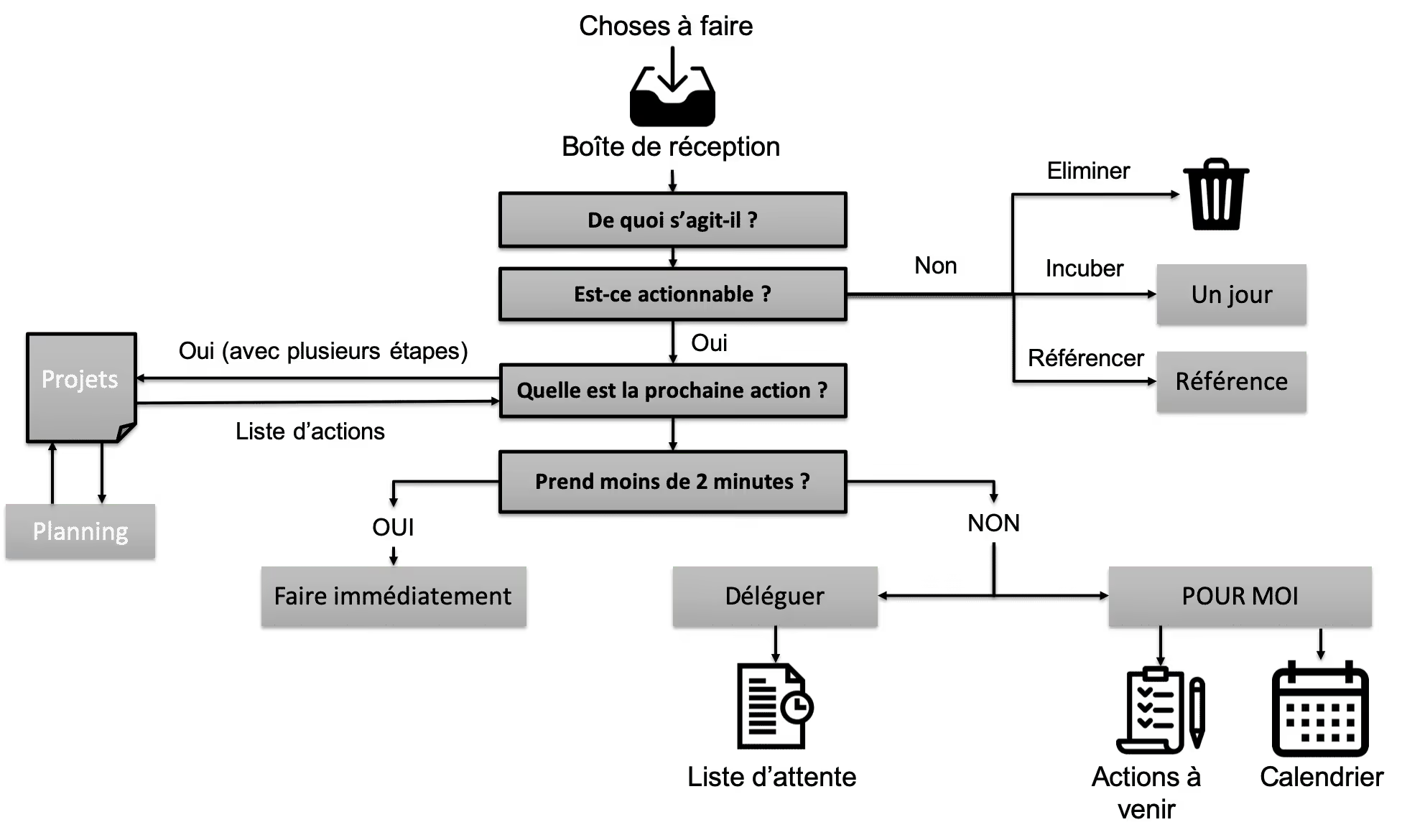
During a working day, it is sometimes difficult to juggle responsibilities and the various tasks to be carried out. To organize your schedule and set priorities, it is recommended to use an efficient organization method. This is where the GTD or “Getting Things Done” method comes in. It has managed to conquer the hearts of many organizations, because it allowsbe more effective at work, without stressing ! Let's discover the secrets of this renowned method that can accompany you on a daily basis.
What is the GTD (Getting Things Done) method?
It was in 2001 that the management consultant David Allen presents a productivity method in a book entitled “Getting Things Done, the art of stress-free productivity GTD”.
This planning method is made up of 5 distinct stages And it turns out simple and quick to set up. For this reason, many employees in companies from various sectors of activity have adopted this method in order to increase productivity.
What tool should I use to deploy the GTD method?
One of the strengths of the GTD method is that it does not require any productive tools or specific software to be implemented. David Allen himself explains in his book that the most important thing is to fully understand the principles of his method. Therefore, a diary and a simple notebook are enough to manage and organize your day in an optimal way.
This point is critical, as it means that the method can be deployed on a large scale across a business. without impacting the company's finances. On the contrary, presenting the GTD method to employees is an ideal way to boost team productivity.
The essential steps to optimize your organization
To work effectively thanks to the GTD method, you need to follow 5 key steps. They will allow you to better plan the tasks to be done and to make more informed decisions.
Step 1: Type
One of the main problems of our time is the constant and considerable inflow of information. You may no longer be able to organize yourself, because you have to simultaneously read emails, find ideas for a project or even... do your shopping! The requests are therefore very numerous.
For this reason, the first step is to enter or capture this information. It is necessary to collect any tasks, ideas, or concerns that arise. So write down this information in a notebook in order to unburden yourself with this information and reduce cognitive fatigue.
Any medium can be suitable as long as it remains accessible at all times. Plus, you need to get in the habit of actually writing everything down. As soon as an idea arises, grasp it immediately. This may seem trivial, but it is the first step to better organize your work and improve your productivity.
Step 2: Clarify
After writing down so many pieces of information, some essential, others trivial, You may think you are overloaded. You are not entirely wrong. For this reason, the second step is clarification.
Once the information is collected, it needs to be clarified. In other words, to get your tasks done., raw data must be transformed into actionable items. This is the only way to increase productivity.
To do this, Ask yourself for each piece of information what it means and what is the next action to consider. If no action corresponds to information, ask yourself questions about deleting, maintaining, or putting this item on hold. Feel free to break items down into sub-items if necessary. The important thing is to avoid putting tasks off until tomorrow by making them more easily usable.
Step 3: Organize
To maximize work efficiency, it is important to organize tasks. Prioritize certain tasks, identify time-consuming or complex tasks, place them in an agenda are unavoidable steps to optimize your organization.
You will define contexts, priorities and deadlines to be respected. By doing so, you will be more efficient, because you will be less subject to stress or distractions. You'll know where and when each action needs to be done.
Several strategies can then be of great help to you to save time and boost productivity. Start by creating, not a single to-do-list, but a set of specific lists built around different contexts. A context can be the office, the home or the calls to be made. As soon as you know in a specific context, you will have a clear idea of the actions to be taken.
Then, don't incorporate it into your schedule Only tasks that have a specific date and time. By doing so, you can quickly visualize the day's tasks that can't wait. Other tasks, those that can be completed at any time, should not be included.
With respect to project management, create a physical or digital file for everyone. Inside this folder, store all associated information, tasks, and sub-tasks.
Step 4: Revise
Planning your time and managing your working time using a reputable method is a good approach. However, you must not fall into the trap of immobility. In other words, even if the system is effective, it is necessary to carry out a regular review. By taking a step back, you can adjust and plan according to your priorities and the new elements in your possession.
Always ensure that your organization system is well aligned with your current goals and values. It is a good way to manage your working time rationally while maintaining a certain agility.
In order to review optimally, take the time each week to consult your lists, monitor the progress of projects and plan for the coming week. Any irrelevant items should then be adjusted or removed.. Also remember to prioritize tasks to control the workload and complete your tasks with peace of mind.
Step 5: Take action
You can use the best tools or working methods, if you don't take action, you won't be able to reach your goals. So, the last step is of course that of Transition to action. It's all ready: you've collected the information, clarified it, and then planned. You must now carry out tasks and projects according to your priorities and the context.
Consult your lists in order to determine what action to take. Depending on your energy level, choose simple and quick tasks or more complex tasks. Don't forget to take into account the context such as the location or the level of emergency.
Take the opportunity to put into practice a famous rule of the GTD method. It states that if an action can be completed in less than two minutes, then you must do it immediately!
Combine organization and serenity
Capture, clarify, organize, review, and take action. The GTD method is an excellent way to become more efficient at work, but also to gain peace of mind. By adopting such a method, you can also gain some form of mental clarity who is not refusing to deal with the accumulation of information and the distractions of the modern world.
You will get straight to the point and move forward with confidence. To further improve the relevance of this method, you can help you with a collaborative work platform. The latter is perfect for listing, storing, organizing, and sharing information at the organizational level. A good way tobring this serenity to the other members of your team.