What is a shared network?

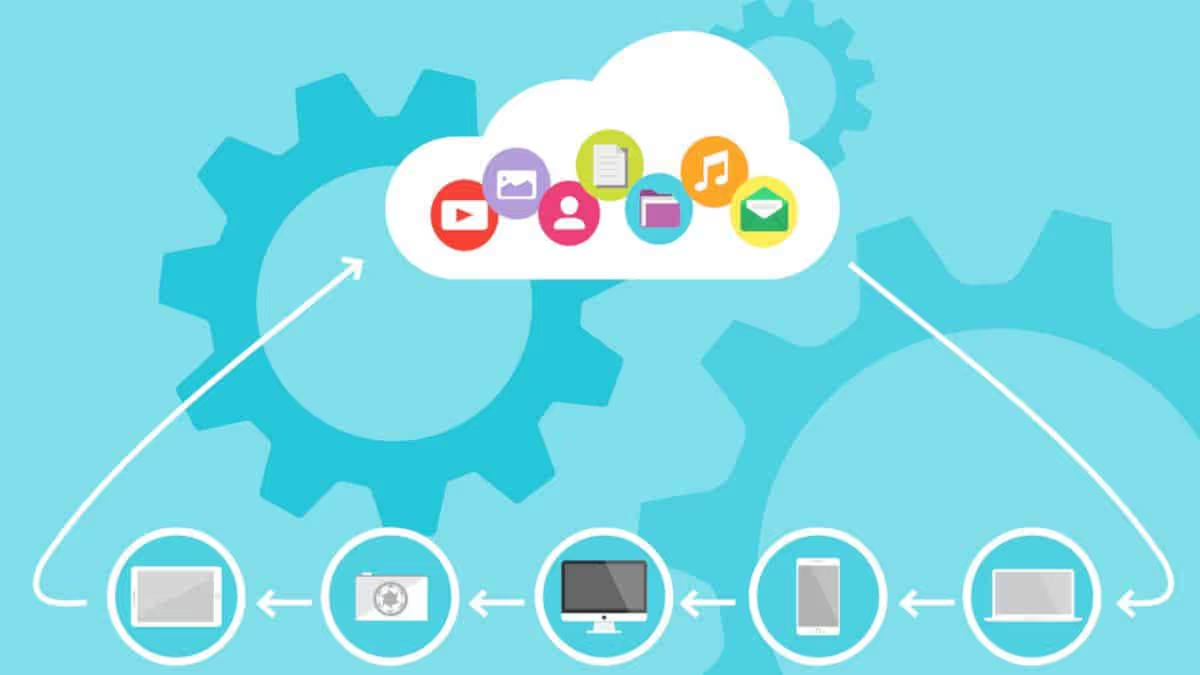
A shared network is a system that allows multiple devices to communicate and share resources with each other. These resources can be composed of physical elements such as printers or hard drives, but also digital elements such as files or folders. In any case, the deployment of such a network is strategic for your productivity and collaborative work as we will see in this article.
Definition and types of shared networks
There are several sharing networks. We present to you the most common collaborative networks :
- Local area network (LAN): A LAN (Local Area Network) is a private local network that connects computers or devices located within the same building. The connection between the devices does not use the Internet and is therefore limited to a specific address.
- Wide Area Network (WAN): The WAN (Wide Area Network) refers to a network extended over a vast geographic area such as a city or a country. Satellites or optical fiber can thus make it possible to link several LANs together.
- Wireless network (WLAN): The WLAN (Wireless Wide Area Network) uses radio waves to connect devices. It thus allows you to connect to the Internet without the need to use cables.
- Peer-to-peer network (P2P): P2P (Peer-to-Peer) is the name of a network in which each device acts simultaneously as client and server.
- Intranet network: It is a private network whose access is restricted to certain users. It can be the employees of a company. They are generally used to exchange information about the organization.
- Mobile connection sharing: Used by the general public, mobile connection sharing allows a smartphone or tablet under iOS or Android, but also a Mac or a computer under Windows, to share its Internet connection with other users using Wifi or 4G.
What are the benefits of a shared network?
The shared network has numerous advantages for employees of a company. It accelerates the fluidity of exchanges and increases the productivity of teams.
Access to shared resources
All authorized users have the right toaccess shared resources at any time. These can be printers, storage devices, or online data. The main thing is to be able get information more quickly searched without the need to go through time-consuming procedures such as copying data to a USB stick.
Communication and collaborative work
Through portals or applications, team members can use the network to communicate and work as a team much more effectively. The corporate document sharing, thesending messages to employees or the establishment of virtual meetings is fast and effective.
Reduced operational costs
La Pro online backup And the pooling of material resources allow a significant optimization of business costs. Processes are in fact streamlined and accelerated, which makes it possible to get to the point and reduce the number of unnecessary devices And ofavoid duplicate documents.
Productivity improvement
When a single word or a simple press of a button is all it takes to start a meeting, teams become more efficient because they can exchange essential information more easily. Accessing an online file explorer is also a very effective option for avoid going back and forth between departments to get a document.
How do you secure a shared network?
A shared network is a ally of business performance. However, to avoid data loss or theft, it is essential to protect your corporate intranet against unauthorized access or malicious software.
We recommend the following best practices :
- Use strong passwords;
- Implement two-factor authentication;
- Install a firewall and keep it up to date;
- Deploy antivirus and anti-malware;
- Update software and OS regularly;
- Reserve access to resources to the necessary users;
- Set up cybersecurity awareness sessions.
By implementing these good habits and processes, you can benefit from the advantages of such an approach while greatly limiting the associated risks.